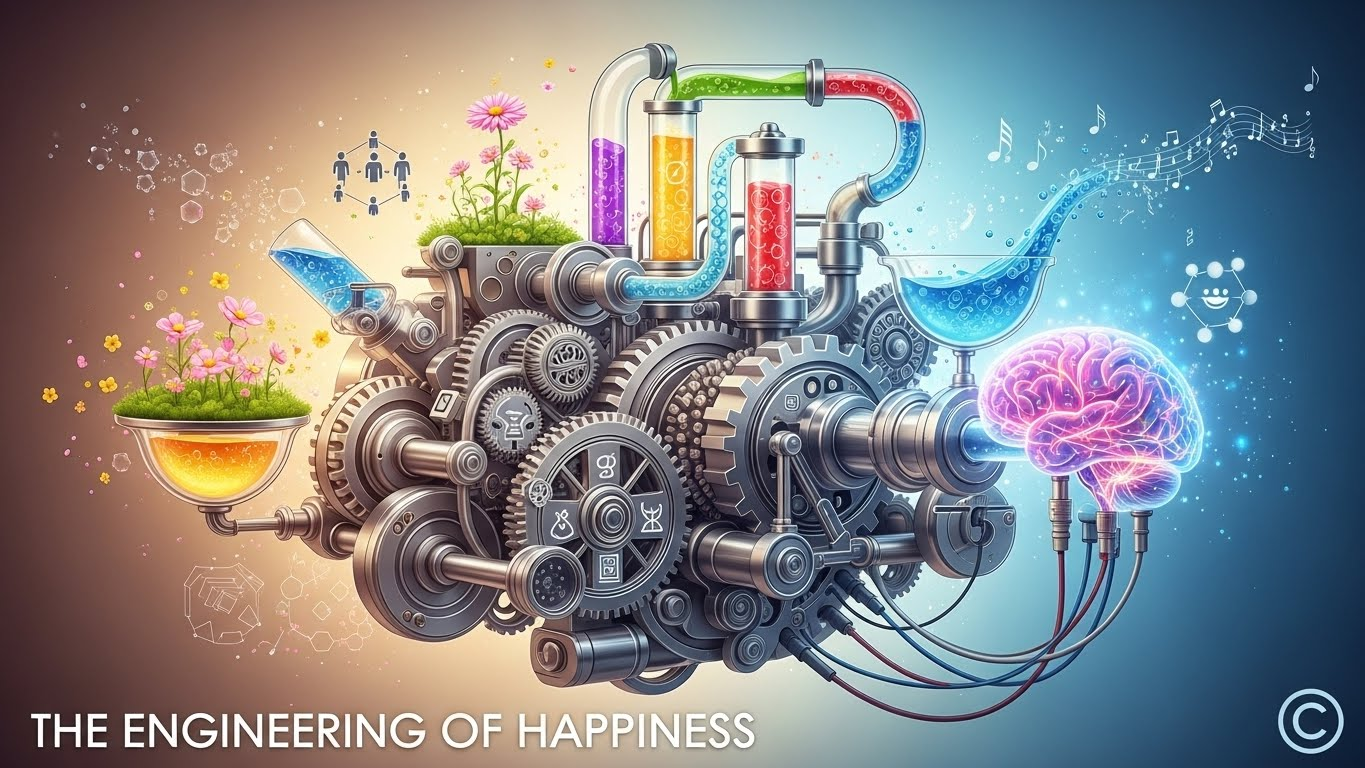
인류는 오랜 세월 행복을 추구해 왔다. 철학자는 행복의 본질을 묻고, 종교는 행복의 길을 제시했으며, 현대 사회는 행복을 측정하고 조작하려는 과학적 시도를 시작했다. “행복을 데이터로 만들 수 있을까?”라는 질문은 단순한 호기심이 아니라, 인류의 삶의 방향을 바꾸는 근본적인 도전이 되었다.
오늘날 행복은 더 이상 추상적인 개념이 아니다. 신경과학은 ‘행복’을 도파민, 세로토닌, 옥시토신 등 뇌 속의 화학적 반응으로 정의한다. 즐거운 일을 할 때 도파민이 분비되고, 사랑을 나눌 때 옥시토신이 상승한다. 인간의 감정이 단지 뇌의 전기적 신호라면, 우리는 행복을 공학적으로 설계할 수 있는 시대에 살고 있는지도 모른다.
실제로 ‘행복 연구(Happiness Studies)’는 경제학, 심리학, 의학을 넘나드는 새로운 학문으로 발전하고 있다. 과학자들은 뇌파, 호르몬, 표정, 언어 패턴 등을 분석해 행복의 공통적 구조를 찾는다. 예를 들어, 일정 수준의 신체 활동과 사회적 관계가 뇌의 보상 시스템을 활성화한다는 연구 결과가 있다. 즉, 행복은 우연이 아니라 재현 가능한 생리학적 과정일 수 있다.
하지만 이 ‘행복의 공학화’는 한 가지 근본적인 질문을 남긴다.
“행복이 설계될 수 있다면, 그것은 여전히 진짜 행복인가?”
행복은 감정이자 관계의 산물이다. 누군가를 사랑하거나, 목표를 성취하거나, 깊은 몰입을 경험할 때 느끼는 만족은 단순한 화학 반응이 아니라 의미의 체험이다. 뇌가 만들어내는 쾌감은 행복의 일부일 수 있지만, 전부는 아니다. 만약 인공적으로 도파민을 조절해 ‘행복’을 지속적으로 느끼게 만든다면, 우리는 결국 감정의 소비자가 되어 버릴 것이다.
진짜 행복은 외부 자극에 의해 주어지는 것이 아니라, 내면의 해석에서 비롯된다. 같은 상황에서도 어떤 이는 감사하고, 어떤 이는 불행하다. 과학이 그 이유를 설명할 수는 있지만, 그 해석을 대신할 수는 없다. 인간의 행복은 측정할 수는 있어도, 완전히 복제할 수는 없다.
행복의 공학은 분명 인류의 가능성을 넓힌다. 우울증 치료, 스트레스 완화, 뇌 자극 치료 등은 수많은 사람에게 새로운 삶의 희망을 주었다. 그러나 우리가 잊지 말아야 할 것은, 과학이 행복을 지원할 수는 있어도 행복을 ‘창조’할 수는 없다는 사실이다. 행복은 결국 인간이 스스로 느끼고 깨닫는 감정이기 때문이다.
기계가 인간의 쾌락을 모방할 수는 있지만, 감사의 눈물이나 사랑의 떨림을 느낄 수는 없다.
행복은 데이터로 계산될 수 없고, 알고리즘으로 완성될 수도 없다.
그것은 인간만이 가진, 불완전하지만 가장 아름다운 감정의 총합이다.
미래의 과학이 아무리 발전해도, 진정한 행복의 공학은 여전히 인간의 마음 속에서 시작된다.
행복은 발견되는 것이 아니라, 깨달음 속에서 피어나는 것이다.
면책 고지 (Disclaimer) 본 블로그의 글은 단순한 참고 자료로 제공되는 것으로, 어떠한 법적·재정적·전문적 책임도 발생하지 않습니다. 제시된 정보의 정확성, 완전성 및 최신성은 보장되지 않으며, 본 자료에 기초하여 행해진 모든 행위에 대한 책임은 전적으로 이용자 본인에게 있습니다. 보다 신뢰할 수 있는 정확한 정보를 원하실 경우, 반드시 관련 공식 사이트 및 전문 자료를 확인하시기 바랍니다.
Humanity has pursued happiness for millennia. Philosophers questioned its nature, religions prescribed paths to it, and now science seeks to measure and engineer it. “Can happiness be designed?” is no longer a poetic question—it is a scientific one reshaping our understanding of life itself.
Neuroscience defines happiness as a pattern of brain chemistry: dopamine, serotonin, and oxytocin. Pleasure releases dopamine, love raises oxytocin. If emotion is merely electrical activity in the brain, then perhaps we already live in an age where happiness can be engineered.
The new discipline of “Happiness Studies” merges economics, psychology, and medicine. Researchers track brainwaves, hormones, facial expressions, and linguistic cues to identify the structure of joy. Studies show that consistent physical activity and meaningful social interaction activate the brain’s reward system. In other words, happiness may not be chance—it may be a reproducible biological process.
Yet this “engineering of happiness” raises a profound question:
“If happiness can be designed, is it still real?”
Happiness is not only chemistry; it is meaning. The joy of love, achievement, or creativity transcends neural signals. While pleasure can be manufactured, fulfillment must be lived. Artificially inducing dopamine may create constant pleasure but empty experience. We risk becoming consumers of emotion rather than creators of it.
True happiness does not come from what happens to us, but from how we interpret it. Two people may face the same event—one feels gratitude, the other despair. Science can describe this difference, but it cannot replace it. Happiness can be measured, but never duplicated.
Engineering happiness expands human potential. It offers real hope through therapies for depression, anxiety, and stress. But science can only assist; it cannot create happiness. Joy remains an inner awakening, not an external formula.
Machines may simulate pleasure, but they cannot feel the trembling of love or the tears of gratitude.
Happiness cannot be computed or coded—it must be felt, imperfectly, and humanly.
No matter how advanced technology becomes, the true engineering of happiness will always begin within the human heart.
Happiness is not found—it is awakened.
Disclaimer This blog post is provided as a simple reference and does not incur any legal, financial, or professional liability. The accuracy, completeness, and up-to-date information presented is not guaranteed, and the responsibility for any actions taken based on this material is entirely up to you. For more reliable and accurate information, be sure to check the relevant official site and professional materials.
人类追求幸福已数千年。哲学家探讨其本质,宗教指引其道路,而现代科学则试图测量并设计幸福。“幸福能被制造吗?”这不再是诗意的疑问,而是改变人类生活方式的科学命题。
神经科学认为,幸福是大脑化学物质的反应:多巴胺、血清素、催产素。快乐时分泌多巴胺,爱时上升催产素。如果情感只是大脑中的电信号,那么我们或许已经进入**“幸福可工程化”的时代。**
如今,“幸福学”成为横跨经济学、心理学、医学的新领域。科学家通过脑电波、荷尔蒙、表情、语言模式来寻找幸福的规律。研究发现,适度运动与社交互动能激活大脑的奖励系统。也就是说,幸福也许并非偶然,而是可重复的生理过程。
然而,这种“幸福的工程化”带来深刻的哲学疑问:
“若幸福可被设计,它还是真实的吗?”
幸福不仅是化学反应,更是意义的体验。爱、成就、创造的喜悦,超越了神经信号。快乐可以制造,但**满足必须亲身经历。**若通过人工刺激多巴胺来持续获得快感,我们终将成为“情绪的消费者”。
真正的幸福源于心灵的解释,而非外界的刺激。相同的处境,有人感恩,有人痛苦。科学可以描述这种差异,却无法替代它。幸福可以被测量,却无法被复制。
幸福的工程为人类带来了新的希望。它能治疗抑郁、缓解压力、重塑情绪。但我们必须记住:科学能帮助我们接近幸福,却**无法创造幸福。**幸福,依然是人类内心的觉醒。
机器可以模拟快乐,却无法感受爱意的颤抖或感恩的泪水。
幸福无法计算,无法编程,只能被人类亲身感受。
无论科技多么发达,真正的“幸福工程”始终从人的心开始。
幸福,不是被发现的,而是被唤醒的。
免责通知(Disclaimer)本博客文章仅供参考,不产生任何法律、财政和专业责任。 提示信息的准确性、完整性和最新性无法得到保证,基于本资料所做的一切行为的责任完全由用户本人承担。 如需更可靠的准确信息,请务必查阅相关官方网站及专业资料。